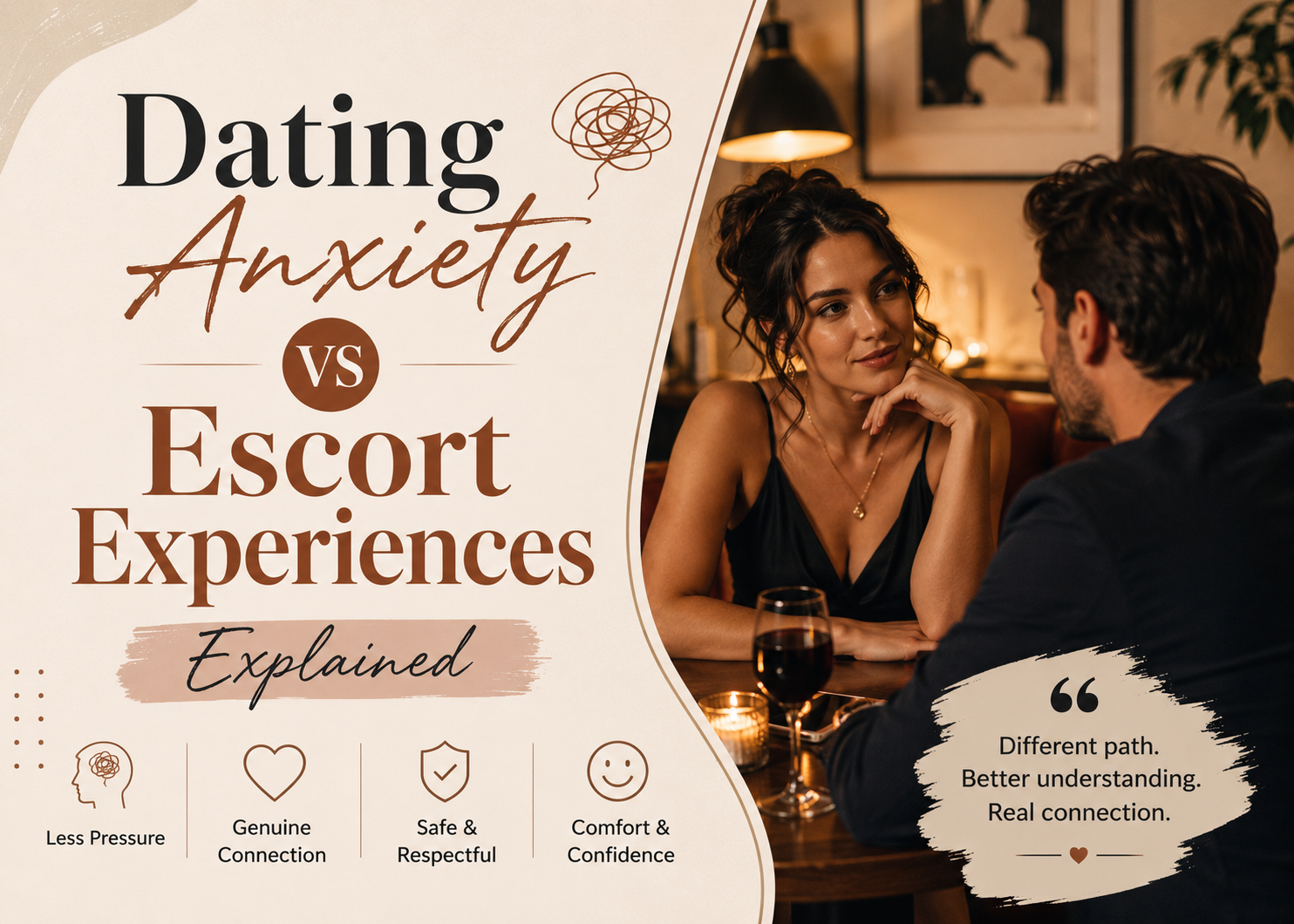
Human relationships often involve emotional expectations, social pressure, and personal vulnerability. While many people seek meaningful companionship through traditional dating, others experience anxiety that affects confidence and communication. Consequently, social interaction becomes stressful instead of enjoyable for some individuals.
Dating anxiety can influence emotional well-being, decision-making, and relationship patterns. Moreover, many individuals struggle with fear of rejection, awkward communication, and pressure associated with romantic expectations. In contrast, escort experiences usually provide structured interaction with clearer boundaries and predictable communication.
This comparison does not focus on judgment or social approval. Instead, it highlights how emotional comfort, confidence, and personal preferences influence social choices. Furthermore, different individuals respond to companionship and emotional interaction in very different ways.
Modern lifestyles also shape relationship behavior. Busy schedules, digital communication, and changing social expectations continue affecting how people approach intimacy and companionship. Therefore, some individuals seek low-pressure interaction rather than emotionally demanding dating experiences.
Several emotional and psychological factors contribute to this contrast. These include:
- Fear of rejection
- Communication anxiety
- Emotional vulnerability
- Social pressure
- Desire for predictable interaction
Consequently, many people evaluate companionship options based on emotional comfort and personal confidence rather than traditional social expectations alone.
What Dating Anxiety Really Means?
Dating anxiety refers to emotional stress linked with romantic interaction and relationship expectations. Many individuals feel nervous before dates, during conversations, or while expressing personal emotions. Moreover, anxiety often affects confidence, communication quality, and emotional balance.
People experiencing dating anxiety frequently overthink conversations and social behavior. Consequently, even simple interactions may feel emotionally exhausting. In contrast, emotionally confident individuals often navigate dating situations more comfortably.
Several common signs of dating anxiety include:
- Fear of rejection
- Nervousness before meetings
- Difficulty maintaining conversation
- Excessive overthinking
- Emotional insecurity during interaction
Furthermore, dating anxiety may affect both new and experienced individuals. While some people struggle with initial interaction, others feel stressed by emotional expectations attached to romantic relationships.
Social Pressure Intensifies Dating Anxiety
Social expectations often increase emotional pressure during dating experiences. Many people feel obligated to impress potential partners, maintain perfect communication, and avoid mistakes during interaction. Consequently, natural conversation becomes difficult.
Modern dating culture frequently emphasizes appearance, confidence, and emotional performance. Moreover, social media platforms often create unrealistic expectations about relationships that increase emotional stress.
Several social pressures contribute to dating anxiety:
- Fear of negative judgment
- Pressure to appear attractive
- Anxiety about emotional compatibility
- Expectations surrounding romantic success
- Concern about relationship failure
In contrast, structured companionship arrangements usually involve more direct communication and fewer emotional uncertainties. Therefore, some individuals feel calmer in situations with clearer expectations and boundaries.
Emotional Uncertainty in Traditional Dating
Traditional dating often involves emotional unpredictability. People may struggle to interpret feelings, intentions, or relationship goals during early interaction. Consequently, uncertainty can create emotional tension and confusion.
Many individuals fear emotional rejection or disappointment. Moreover, inconsistent communication sometimes increases stress and insecurity. Therefore, dating experiences may become emotionally draining for people who already struggle with anxiety.
Several emotional challenges commonly appear during dating:
- Mixed communication signals
- Unclear relationship expectations
- Fear of emotional rejection
- Worry about compatibility
- Anxiety related to long-term commitment
In contrast, escort experiences generally involve clearer communication and defined expectations. Consequently, some individuals prefer interaction without emotional uncertainty or relationship pressure.
Escort Experiences and Emotional Simplicity
Escort experiences usually focus on companionship within structured boundaries. Many individuals choose these arrangements because they reduce the emotional pressure associated with traditional dating. Moreover, predictable interaction often creates greater emotional comfort.
Structured companionship can feel less stressful for people dealing with social anxiety or communication insecurity. Consequently, individuals may feel more relaxed during interaction without fear of emotional rejection.
Several factors contribute to emotional simplicity in escort experiences:
- Clear communication expectations
- Reduced emotional pressure
- Defined boundaries during interaction
- Lower fear of rejection
- Predictable social environments
However, escort experiences and traditional dating serve different emotional purposes. While dating often seeks emotional attachment and long-term connection, structured companionship generally focuses on temporary interaction and emotional ease.
Confidence Plays a Major Role
Confidence strongly affects relationship experiences and social communication. People with dating anxiety often struggle with self-doubt during romantic interactions. Consequently, they may avoid dating altogether or experience emotional discomfort throughout the process.
Escort experiences may feel easier for individuals who dislike romantic pressure or emotional uncertainty. Moreover, structured interaction can reduce stress linked with rejection and emotional vulnerability.
Several confidence-related factors influence these choices:
- Fear of awkward communication
- Anxiety during first meetings
- Difficulty expressing emotions
- Concern about personal appearance
- Stress linked with romantic expectations
In contrast, emotionally confident individuals may enjoy the excitement and unpredictability associated with traditional dating. Therefore, social preferences often depend on personality, emotional comfort, and communication style.
Communication Differences Between the Two Experiences
Communication patterns differ significantly between dating and escort experiences. Traditional dating usually involves emotional interpretation, relationship goals, and discussions about long-term compatibility. Consequently, communication often feels emotionally complex.
Escort experiences generally focus on direct communication and immediate expectations. Moreover, individuals usually avoid emotional uncertainty because interaction follows clearer boundaries.
Important communication differences include:
Dating Communication
- Emotional vulnerability
- Romantic expectations
- Long-term relationship discussion
- Unpredictable emotional responses
- Concern about compatibility
Escort Communication
- Direct interaction
- Defined expectations
- Structured boundaries
- Predictable communication style
- Reduced emotional ambiguity
Therefore, individuals who struggle with emotionally complicated communication may prefer environments with clearer interaction patterns.
Rejection Anxiety Influences Social Decisions
Fear of rejection remains one of the strongest causes of dating anxiety. Many individuals avoid romantic interaction because they fear embarrassment, emotional disappointment, or social judgment. Consequently, dating becomes emotionally stressful instead of enjoyable.
Traditional dating often involves uncertainty regarding attraction and compatibility. Moreover, rejection may negatively affect emotional confidence and self-esteem.
Several rejection-related concerns commonly appear during dating:
- Fear of emotional disappointment
- Anxiety about personal appearance
- Concern regarding social acceptance
- Worry about communication mistakes
- Fear of relationship failure
In contrast, escort experiences typically remove many rejection-related fears because expectations remain more direct and structured. Therefore, some individuals feel emotionally safer in those situations.
Emotional Attachment Creates Additional Pressure
Traditional dating often encourages emotional attachment and relationship development. While many people value emotional intimacy, others feel overwhelmed by emotional responsibility and vulnerability. Consequently, dating anxiety may increase when individuals fear emotional dependence or heartbreak.
Escort experiences generally involve temporary interaction rather than emotional commitment. Moreover, defined boundaries may help individuals avoid emotional complications that often appear in romantic relationships.
Several emotional concerns affect dating experiences:
- Fear of heartbreak
- Anxiety surrounding emotional dependency
- Concern about long-term expectations
- Stress related to commitment
- Difficulty expressing vulnerability
However, emotional attachment also creates meaningful connections and relationship depth that structured companionship cannot fully replace. Therefore, emotional priorities strongly influence personal preferences.
Modern Technology Has Changed Relationship Behavior
Digital communication continues to reshape dating culture and social interaction. Dating applications, social media platforms, and online communication tools increase social access. However, they also increase emotional pressure and comparison.
Many individuals experience anxiety while managing online conversations, profile expectations, and digital rejection. Consequently, online dating sometimes intensifies emotional stress rather than reducing it.
Several technological factors affect dating anxiety:
- Constant social comparison
- Pressure to maintain online appeal
- Fear of ignored messages
- Emotional stress from digital rejection
- Difficulty interpreting online communication
In contrast, structured companionship arrangements usually involve more direct communication without prolonged emotional uncertainty. Therefore, some individuals prefer interaction that avoids complicated digital dating behavior.
For example, online searches related to call girl Rishikesh indicate that many people seek companionship arrangements focused on convenience, emotional ease, and straightforward communication instead of emotionally demanding dating experiences.
Lifestyle Preferences Affect Relationship Choices
Lifestyle differences significantly influence relationship preferences and emotional priorities. Some individuals enjoy emotional excitement, romantic unpredictability, and relationship development. However, others prioritize convenience, emotional stability, and personal freedom.
Busy professionals, frequent travelers, and socially reserved individuals often seek interaction without complicated emotional expectations. Consequently, they may prefer structured companionship instead of traditional dating.
Several lifestyle-related factors influence these decisions:
- Limited time for relationship building
- Preference for emotional simplicity
- Desire for flexible interaction
- Reduced interest in long-term commitment
- Focus on convenience and comfort
Moreover, personal priorities continue evolving with age, professional responsibilities, and emotional maturity. Therefore, social behavior often reflects individual lifestyle goals rather than social expectations alone.
Mental Wellbeing and Emotional Balance
Mental well-being plays an important role in relationship decisions and social interaction patterns. Dating anxiety may create emotional exhaustion, stress, and low confidence when individuals constantly worry about rejection or emotional failure. Consequently, some people avoid romantic interaction entirely.
Escort experiences may reduce emotional pressure because communication feels more structured and predictable. Moreover, reduced emotional uncertainty often creates temporary emotional comfort for socially anxious individuals.
Several emotional well-being factors influence social choices:
- Need for emotional stability
- Desire to avoid relationship stress
- Preference for predictable communication
- Reduced tolerance for emotional uncertainty
- Interest in calm social interaction
However, emotional well-being also depends on meaningful connections, trust, and long-term companionship. Therefore, temporary emotional comfort may not always replace genuine emotional intimacy.
Public Perception and Social Judgment
Public opinion strongly influences how people approach relationships and companionship choices. Traditional dating generally receives broader social acceptance because society often associates dating with emotional connection and relationship development. In contrast, escort experiences frequently face criticism, misunderstanding, and moral judgment.
Many individuals avoid discussing companionship preferences openly because they fear social embarrassment or criticism. Consequently, emotional pressure may increase when personal choices conflict with social expectations. Moreover, public perception sometimes shapes relationship behavior more strongly than personal comfort or emotional needs.
Several social factors contribute to this pressure:
- Fear of negative judgment
- Concern regarding reputation
- Pressure to follow traditional relationship norms
- Anxiety surrounding public opinion
- Emotional discomfort linked with criticism
However, personal relationship decisions often depend more on emotional comfort and individual priorities than on social approval alone. Therefore, people continue making choices based on personal confidence, convenience, and emotional stability despite outside opinions.
Conclusion
Dating anxiety and escort experiences represent two very different approaches to companionship and social interaction. Traditional dating often involves emotional vulnerability, romantic uncertainty, and relationship expectations. Consequently, many individuals experience stress, fear of rejection, and communication anxiety during dating experiences.
In contrast, escort experiences usually provide structured interaction with clearer boundaries and predictable communication. Moreover, reduced emotional pressure may create greater comfort for individuals who struggle with romantic uncertainty or social anxiety.
However, both experiences fulfill different emotional and social needs. Dating often supports emotional intimacy and long-term connection, while structured companionship generally emphasizes convenience, temporary interaction, and emotional simplicity.
As modern lifestyles continue evolving, relationship behavior will likely continue changing as well. Therefore, individuals will keep choosing social experiences that align with emotional comfort, confidence levels, communication preferences, and personal priorities.
FAQs
1. What causes dating anxiety in many individuals?
Dating anxiety often develops from fear of rejection, emotional vulnerability, and social pressure. Many individuals worry about communication mistakes, compatibility issues, and personal appearance during romantic interaction. Consequently, emotional stress increases, especially when people place high expectations on dating outcomes and relationship success.
2. Why do some people prefer structured companionship?
Some individuals prefer structured companionship because it reduces emotional uncertainty and social pressure. Clear expectations and direct communication often create greater emotional comfort. Moreover, predictable interaction may feel less stressful for people who struggle with dating anxiety, rejection fears, or emotionally complicated relationship dynamics.
3. Does dating anxiety affect confidence levels?
Yes, dating anxiety frequently affects confidence because people may overthink conversations, fear rejection, and doubt their social abilities. Consequently, nervousness increases during romantic interaction. Moreover, repeated emotional stress may reduce self-esteem and discourage individuals from participating in traditional dating experiences.
4. How do communication styles differ in both experiences?
Traditional dating usually involves emotional interpretation, relationship discussions, and romantic expectations. In contrast, escort experiences often focus on direct communication and defined boundaries. Therefore, people who prefer straightforward interaction may feel more comfortable in structured companionship settings than emotionally unpredictable dating environments.
5. Why does emotional uncertainty create stress during dating?
Emotional uncertainty creates stress because individuals cannot always predict feelings, compatibility, or relationship outcomes. Moreover, mixed communication signals often increase insecurity and emotional confusion. Consequently, many people experience anxiety while trying to interpret romantic interest and emotional intentions during traditional dating experiences.
6. Can social pressure increase dating anxiety?
Yes, social pressure significantly increases dating anxiety. Many individuals feel obligated to appear attractive, confident, and emotionally successful during romantic interaction. Moreover, social media and cultural expectations often create unrealistic standards. Consequently, dating experiences sometimes become emotionally exhausting instead of enjoyable and natural.
7. Do escort experiences eliminate emotional complications?
Escort experiences may reduce certain emotional complications because interaction usually follows defined boundaries and expectations. However, they do not completely replace emotional intimacy or long-term connection. Consequently, individuals seeking meaningful romantic attachment may still prefer traditional relationships despite emotional challenges and dating anxiety.
8. How does technology affect modern dating behavior?
Technology affects dating behavior through social media platforms, dating applications, and online communication tools. While digital access increases social opportunities, it also increases comparison, rejection anxiety, and communication pressure. Consequently, many individuals experience emotional stress linked with digital dating culture and online interaction expectations.
9. Why do busy professionals sometimes avoid traditional dating?
Busy professionals often avoid traditional dating because relationship building requires emotional energy, time, and consistent communication. Moreover, demanding schedules may create stress and limit availability for romantic interaction. Consequently, some individuals prefer companionship arrangements that provide flexibility and reduced emotional complexity.
10. Can emotional comfort influence relationship choices?
Yes, emotional comfort strongly influences relationship choices because people naturally seek interaction that feels safe and manageable. Some individuals enjoy romantic excitement and emotional unpredictability. However, others prefer calm communication, predictable interaction, and reduced social pressure. Consequently, emotional priorities often shape companionship preferences.

